KPV in carriers and combinations
The transporter and the protective carrier deserve room beside the peptide. In the experiments here, they help explain how KPV reaches the cells under study.
The PepT1 experiment
KPV consists of lysine, proline and valine, the final three amino acids of the hormone alpha-MSH. A review of alpha-MSH and related tripeptides describes KPV retaining anti-inflammatory activity in research models while lacking the full hormone's pigmentary action.
The PepT1 uptake study used human intestinal and immune cells grown in dishes, alongside mouse colitis experiments. PepT1 is a protein that carries small peptides into cells, and inflamed intestinal tissue has more of this transporter. KPV reduced inflammation-related signalling and the release of inflammatory substances in the cultured cells; oral KPV reduced the severity of colitis in mice.
The human origin of some cultured cells can be easy to misread as a human treatment result. Here the patients are still missing. The observed cell uptake gives the mouse findings a plausible route of action, while the clinical question remains open.
Nanoparticles and gel
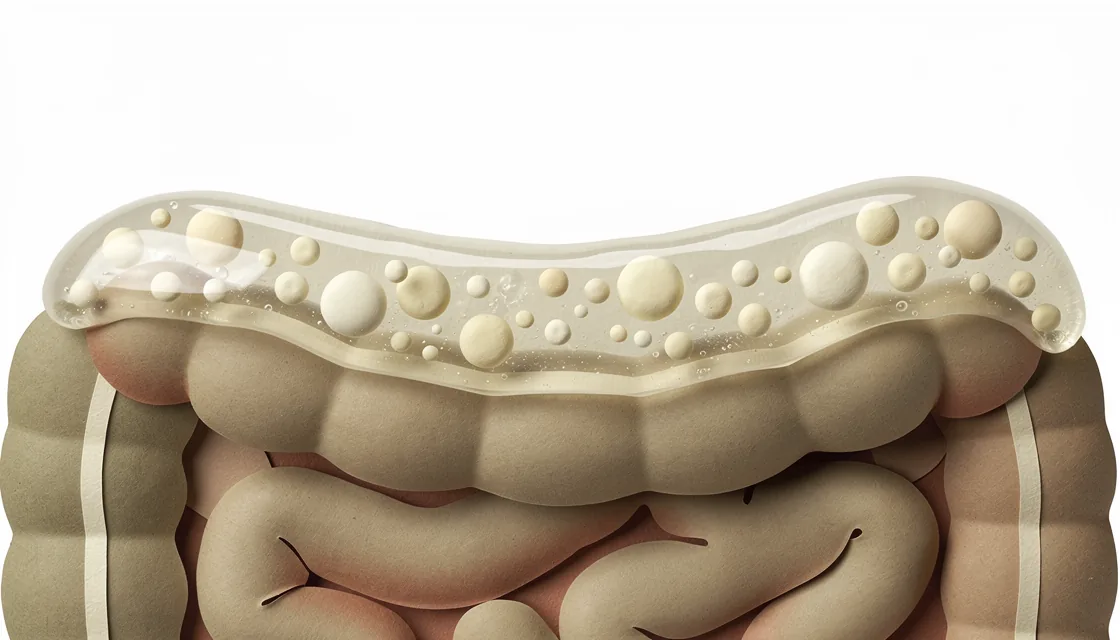
An unprotected peptide can be broken down on its way through the gut. Researchers therefore tested KPV-loaded nanoparticles inside a protective hydrogel, a water-holding gel, in mice with chemically induced colitis. The particles had a hyaluronic-acid coating designed to help them reach inflamed colon tissue.
This targeted preparation reduced disease more effectively than formulations without the same targeting. It also reduced inflammatory signals and helped protect the bowel lining under those experimental conditions.
I give that carrier system a leading role in this paper. The investigators changed the way KPV travelled and reached tissue, and the result belonged to that preparation. Describing it simply as KPV helping the gut loses the work that made the experiment distinctive.
KPV and immunosuppression
A later study went further, co-assembling KPV with an immunosuppressant in a PepT1-targeted nanodrug. An immunosuppressant dampens immune activity. In mice with acute or chronic colitis, the combined preparation improved disease outcomes more than either agent alone, restored proteins involved in the tight junctions between bowel cells and reduced inflammatory cytokines.
A separate mouse study of KPV found earlier recovery, less inflammatory-cell infiltration and lower activity of an enzyme associated with inflammation. Its effects persisted in mice lacking a particular melanocortin receptor, suggesting that KPV's action did not depend entirely on that receptor.
The studies address different pieces of the biology: uptake, inflammatory activity, protection during delivery and a second active ingredient. They give good reasons to investigate further. They also make a simple claim about an unprotected peptide increasingly difficult to justify.
Human evidence and safety
No published human clinical trial establishes KPV as a standalone treatment. Human pharmacokinetics, benefit and clinical safety remain unestablished, and KPV has no approved medicine or dietary-supplement use.
The absence of human adverse-event counts leaves safety unanswered. A different carrier could alter both exposure and unwanted effects; a combination containing another active drug adds its own uncertainties. The review of the peptide family surveys protective effects in animal and cell models, which cannot settle those questions for patients.
I await human evidence for a defined preparation reaching a defined tissue safely. The comparison page sets these mouse and cell experiments beside the very different human trial programmes for semaglutide and tirzepatide.